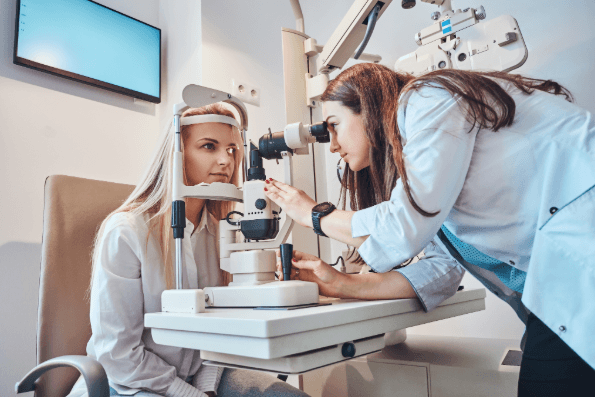

Optometrists’ practices require high-quality, up-to-date equipment in order to deliver good patient care. Equipment such as digital retinal imaging machines and optical coherence tomography (OCT) machines, as well as examination machines, can involve considerable investment. In many cases, opting for optometry equipment leasing may be a better alternative for a practice than spending more money.
- Preserve Cash Flow for Everyday Operations
Optometry equipment leasing may offer one major benefit that is freeing up the capital of the business owner. By directly purchasing equipment, a lot of the available cash of the business owner gets spent. The business owner then is left with very little money for payroll, rent, marketing, and supplies, among other operating expenses. By leasing, practices can even out the equipment cost with regular payments. Besides the owner being able to retain more working capital, he/she gets the necessary equipment at the same time. For independent practices that don’t benefit from the economies of scale of bigger medical organizations, keeping the cash flow is important.
- Make Advanced Technology Available Without Paying Much Initially
The technology used in the field of vision care is constantly improving, and patients want vision care facilities to be provided with accurate and easy diagnostic instruments. Nevertheless, when it comes to buying new technical equipment regularly, this may become quite problematic due to high costs of upgrades. Fortunately, optometry equipment leasing provides an opportunity to avoid investments. Instead of waiting for a long time until the practice has enough money to buy the required machine, owners can simply lease high-class instruments and implement them into their work much sooner. Availability of state-of-the-art technologies will let optometrists take their diagnostic skills to a new level and improve the quality of examinations as well as broaden the range of services provided.
- Minimize Up Front Capital Requirements
Acquisition of equipment needs a hefty investment up front. According to the kind of equipment one acquires, one can end up paying hundreds or even thousands of dollars. In some cases, it is not necessarily wise to make a huge investment in one piece of equipment in an expanding business. Optometry equipment leasing makes a huge investment into an asset unnecessary. Instead, one can make the investment through planned payments. This will make one able to invest in other areas of his business like advertising and renovations.
- Maintain Greater Financial Flexibility
Practice owners need financial flexibility because business requirements may quickly alter. A new office, an equipment breakdown, an emergency repair, or a requirement to hire more staff may result in a need for additional money. Leasing a solution can enable practice owners to retain financial flexibility by decreasing the amount of cash committed to equipment. Rather than purchasing equipment at one go with a big chunk of capital, an owner has the option to set aside enough money to handle unforeseen expenses and make a move when a good opportunity presents itself. Given that optometry equipment leasing payments are not limited in any way by the lender or loan type, one of the main advantages that leasing can bring is flexibility in terms of payments that can correspond to the practice’s actual budget and predicted revenues. As a lease owner, you must scrutinize all the conditions, such as lease terms, leasing charges, total costs, post-lease conditions, fees, and other details of the agreement so that you are prepared when you execute the contract.
- Assist Practice Advancement
Equipment can be an integral part of the advancement of a practice. Sophisticated diagnostic features might enable an optometrist to launch new services, as well as help with attracting new patients for higher revenue generation. For instance, if a practice were to invest in specialized diagnostic tools, they would be able to offer services that were impossible before. Instead of waiting for necessary financing to buy this equipment, leasing can allow optometry businesses to acquire this equipment sooner, while still controlling capital expenses. Leasing can also complement other financing methods. Loans for optometry practice expansion can take care of broader expenditures such as office improvements, day-to-day financing, repairs, or acquisition costs, whereas leasing can specifically focus on acquiring the required equipment. By separating these financing methods, owners can better manage their funding.
- An Instrument of Strategy for Independent Clinics
Optometry equipment leasing may be the means of achieving the optimal combination of accessibility of technological equipment and fiscal responsibility for independent clinics. This kind of leasing is expected to lower initial expenditures, protect cash flow, enable upgrades, and increase flexibility for investments by owners. Leasing can be one of the components of a bigger financing strategy that will be built based on the needs of the practice if compared with optometry business loans and optometry equipment financing.
- Conclusion
Optometry equipment leasing is a very viable option when it comes to accessing the necessary equipment without compromising your cash flow and having to invest a lot of capital at once. This allows you to save enough money for running your business, hiring new staff, advertising, and expanding. When considering optometry equipment financing, opting for leasing can give you more options if you need to improve your technology but do not have to spend a great deal of money upfront.


 By