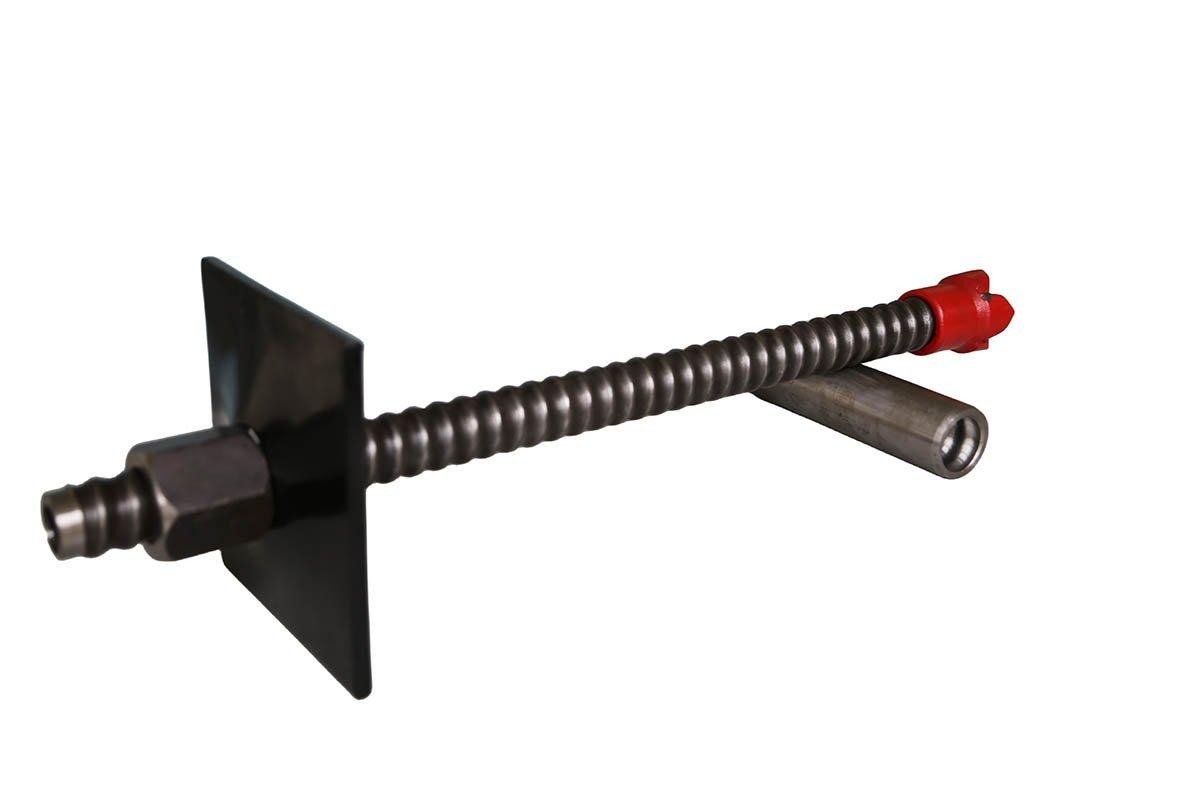

A ground screw anchor at the heart of a ground anchor system looks unremarkable: a steel tube with a spiral blade near the tip and a bracket on top. Yet this simple device can hold a solar array, a fence or a garden room firmly in place without concrete. The secret is the way the screw grips the soil. This article explains how a ground anchor system based on screw anchors works, how it is installed and what affects its strength.
The Screw Principle: Grip From the Soil Itself
A screw anchor works like a giant wood screw. As it turns into the ground, the helical blade cuts into the soil and pulls the anchor downwards. The soil above the blade resists being lifted, and that resistance is what holds the anchor in place. The deeper the blade and the firmer the soil, the greater the holding power.
This is the core idea behind every ground anchor system that uses screw anchors. Unlike a concrete foundation, which relies on weight and mass, a screw anchor relies on the strength of the soil around its blade. That makes the soil itself part of the foundation, which is why understanding ground conditions is so important.
Parts of a Ground Screw Anchor
A typical screw anchor in a ground anchor system has three parts. The shaft is a galvanised steel tube that carries the load from the structure down to the blade. The helical blade, welded near the tip, does the gripping. The head or bracket at the top connects the anchor to the structure, and many brackets allow adjustment so the structure can be levelled after installation.
Shafts come in different diameters and lengths, and blades come in different sizes. A longer shaft reaches firmer soil deeper down, while a wider blade spreads the load over more soil. Choosing the right combination for your ground anchor system is a design decision, not a guess, and it depends on the loads and the ground.
Installation Step by Step
Installing a screw anchor starts with marking out the positions. Accuracy matters, because the structure will be fixed to the brackets, so a string line or laser level is used to set the layout. The anchor is then screwed in, either by hand with a drive bar, with a portable electric driver or with a small machine for larger projects.
As the anchor turns, the installer feels the resistance build. Steady, increasing resistance means the blade is biting well. If the anchor spins too freely, the soil is soft and a longer anchor may be needed. Once the anchor reaches the right depth, the bracket is fitted and adjusted to the correct height and level. The process repeats for each position, and the structure can be fixed to the brackets straight away, with no curing time at all.
Because the work is quiet and clean, screw anchors suit gardens and occupied sites where a concrete pour would cause disruption. There is no excavation, no spoil and no wet concrete to protect from rain.
Loads: What a Screw Anchor Can Hold
A ground anchor system must resist three kinds of load: the downward weight of the structure, sideways forces from wind, and uplift, which is wind trying to lift the structure off the ground. Uplift is often the critical one, especially for solar panels and fences, which catch the wind like a sail.
Manufacturers of a ground anchor system test their anchors in different soils and publish load figures, usually as a safe working load with a margin built in. The figures depend on the soil, so an anchor that holds strongly in firm clay may hold less in loose sand. A good supplier will ask about the soil and the structure before recommending an anchor size for your ground anchor system, and for larger projects a trial pull test on site can confirm the holding power directly.
Soil Types and What They Mean
Soil makes or breaks a ground anchor system installation. Firm loam and clay are ideal: the blade cuts in cleanly and the soil grips it tightly. Gravelly ground can work well too, though stones may deflect the blade and need a little patience. Soft, loose topsoil offers little grip, so the anchor must pass through it to reach firmer ground below.
Rocky ground is the hardest case. A blade that hits solid rock will not advance, and forcing it can damage the anchor. In such ground, a shorter anchor into a soil pocket, or a different fixing method, may be needed. Waterlogged ground also reduces holding power, because saturated soil grips less firmly. A trial installation is the quickest way to learn what the ground will do.
5 Checks During Installation
- Position accuracy: mark out with a string line or laser before driving any anchor.
- Steady resistance: the anchor should bite firmly, not spin freely in soft soil.
- Correct depth: the blade must sit below the soft topsoil in firmer ground.
- Level brackets: adjust each head so the structure sits square and true.
- Final pull check: confirm each anchor is tight and seated before fixing the structure.
Frequently Asked Questions
How deep do ground screw anchors go?
It depends on the soil and the loads, but most anchors for garden structures and solar arrays sit between half a metre and two metres deep, with the blade in firm ground below the topsoil.
Can I install screw anchors myself?
Small anchors for fences and garden structures can be installed by hand with a drive bar. Larger anchors, and any project with structural loads, are best left to an experienced installer.
Do screw anchors damage the ground?
Very little. Each anchor disturbs only a small patch of soil, and when removed the hole can be filled and the ground restored, unlike a concrete foundation.
Final Thoughts
A ground screw anchor turns the soil itself into the foundation, using a helical blade to grip firm ground below the surface. When the anchor is matched to the soil and the loads, and installed with care, a ground anchor system gives a fast, clean and strong foundation that can be loaded the same day and removed just as easily.

 By