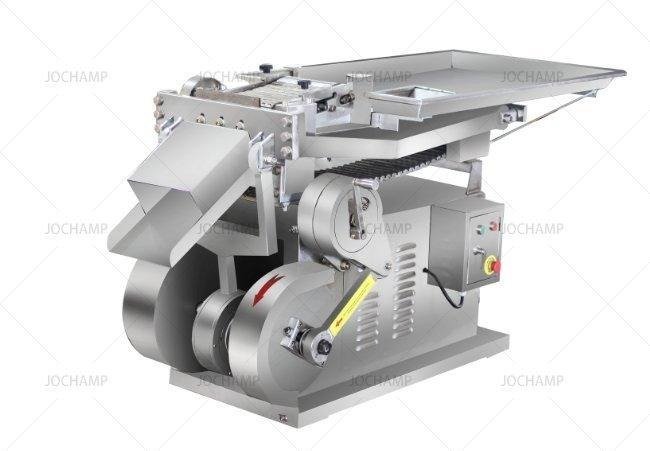

A clean, even cut starts before the blades ever touch the leaf. How tobacco is handled, stored and conditioned determines whether the cutter slices it into smooth strands or shatters it into dust. A tobacco leaf cutting machine can only do its best work when the leaf arrives in the right condition, so preparation deserves as much attention as the cutting itself.
Why Preparation Matters
Cured tobacco leaf is dry, light and fragile. In that state it snaps rather than slices, and a cutter fed with dry leaf produces short fragments and a great deal of dust. Properly prepared leaf is supple and pliable, bending without breaking, so the blades can slice it cleanly. A tobacco leaf cutting machine fed with leaf conditioned this way produces smooth, even strands with very little dust, while the same leaf conditioned in a hurry tears and crumbles.
Preparation also affects flavour and consistency. Leaf that is conditioned evenly cuts evenly, and even strands burn evenly. A batch prepared carelessly will cut unevenly no matter how good the tobacco leaf cutting machine is, so the work done before cutting shows in the final product.
Handling Leaf from Storage
Tobacco leaf is usually stored in bales or bundles, pressed tightly together. Opening a bale needs care: pull the leaf apart gently rather than tearing it, and remove any stems, damaged leaves or foreign matter as you go. Rough handling breaks the leaf and creates short pieces that will only become waste at the cutter.
Keep the work area around the tobacco leaf cutting machine clean and dry. Leaf picks up moisture from a damp floor and dust from a dirty bench, both of which affect the cut. Handle the leaf in small lots rather than emptying a whole bale at once, so each lot can be conditioned and cut while it is fresh.
Conditioning: Restoring Moisture
Conditioning brings the leaf back to a workable moisture level. The usual method is gentle steaming or a fine mist of water, applied evenly and given time to soak through. The leaf should feel cool and flexible when it is ready, bending easily without cracking or feeling wet.
Rushing this step is a common mistake. If the surface is damp but the inside is still dry, the leaf cuts unevenly. Give the moisture time to spread through the leaf, and check a few leaves from the middle of the batch, not only from the top. A tobacco leaf cutting machine fed with evenly conditioned leaf produces a noticeably better cut.
Checking Moisture Levels
A moisture meter gives a quick, objective reading and removes the guesswork. Check several leaves from different parts of the batch, because moisture varies within a bale. If readings differ widely, the batch needs more time or more even application.
Experience helps too. An experienced handler can judge leaf by feel: too dry and it crackles, too wet and it feels heavy and sticks together. Combine that judgement with a meter reading, and you will rarely be wrong.
5 Preparation Steps Before Cutting
- Open bales gently and remove stems, damaged leaf and foreign matter.
- Loosen the leaf into an even layer, free of clumps and tight knots.
- Condition with steam or a fine mist until the leaf is supple throughout.
- Allow time for moisture to spread evenly through the whole batch.
- Check moisture with a meter and by feel before feeding the cutter.
Loosening and Layering
Before cutting, the leaf must be loosened into an even layer. Tight clumps feed unevenly and produce thick and thin patches in the cut. Spread the conditioned leaf out, break apart any knots by hand, and form a layer of even thickness across the feed width.
This is unglamorous work, but it pays off directly. A tobacco leaf cutting machine fed with a steady, even layer holds its cut width and produces far less waste than one fed in lumps.
Storage Between Preparation and Cutting
Once conditioned, leaf should be cut promptly. Left sitting, it can dry out at the edges or grow too damp in the centre. If there is a delay, cover the prepared leaf to hold its moisture steady, and keep it away from draughts and direct heat.
Do not condition more leaf than your tobacco leaf cutting machine can cut in a shift. Freshly prepared leaf cuts best, and a pile left overnight rarely cuts as well the next morning as it would have the day before. A tobacco leaf cutting machine works best with leaf prepared the same day, so plan the workflow so conditioning and cutting follow each other closely. When the two stages run in step, the leaf reaches the cutter at its best and the cut stays even from the first batch to the last. That rhythm, more than any single setting, is what steady production looks like.
Frequently Asked Questions
How moist should leaf be before cutting?
It should feel supple and cool, bending without cracking and without feeling wet. A moisture meter gives the most reliable check.
Can leaf be over-conditioned?
Yes. Leaf that is too wet clumps together, sticks to the rollers and cuts unevenly. If it feels heavy and damp, let it rest and dry slightly before cutting.
Does preparation affect the final flavour?
Indirectly, yes. Even cutting gives even burning, and even burning gives a steadier flavour. Poor preparation leads to uneven strands, which burn unevenly.
See also: Technology and the Future of Education
Final Thoughts
Preparing tobacco leaf well is the foundation of a good cut. Handle the leaf gently, condition it evenly, give moisture time to spread, and feed the cutter a steady, even layer. A tobacco leaf cutting machine will reward that care with clean strands, less waste and a consistent product. The blades get the credit, but the preparation does much of the work.

 By


 By