
Manufacturing products in large quantities requires more than efficient machinery and access to raw materials. Businesses must also maintain consistent quality, accurate specifications, and reliable production standards throughout the manufacturing process. When products are produced in bulk, even small variations can affect the appearance, dimensions, and overall quality of finished goods.
Product consistency is particularly important in specialty manufacturing, where customers expect products from different production batches to meet similar specifications. Understanding how manufacturers maintain this consistency provides valuable insight into production planning, quality control, inspection procedures, and packaging management.
Understanding Product Consistency in Manufacturing
Product consistency refers to the ability to manufacture products that maintain similar characteristics across individual units and production batches.
These characteristics may include:
- Material composition
- Product dimensions
- Weight and thickness
- Surface appearance
- Structural quality
- Packaging specifications
Manufacturers establish product requirements before production begins. These specifications provide a reference for evaluating whether finished products meet the expected standards.
Maintaining consistency helps reduce unnecessary variations and supports more predictable manufacturing outcomes.
Why Consistency Matters in Bulk Production
Bulk manufacturing involves producing large quantities within an organized production schedule. Without suitable controls, differences in materials, equipment settings, and production conditions can create variations between batches.
Meeting Customer Expectations
Customers generally expect products to match the specifications agreed upon during purchasing. Consistent manufacturing helps businesses meet these expectations across repeated orders.
Reducing Production Waste
Identifying problems early can prevent large quantities of defective products from moving through additional production stages.
This can reduce material waste, unnecessary rework, and avoidable production costs.
Maintaining Brand Reputation
Consistent product quality contributes to customer confidence. Businesses that maintain reliable manufacturing standards are better positioned to build long-term relationships with their customers.
Manufacturing Quality Control Procedures
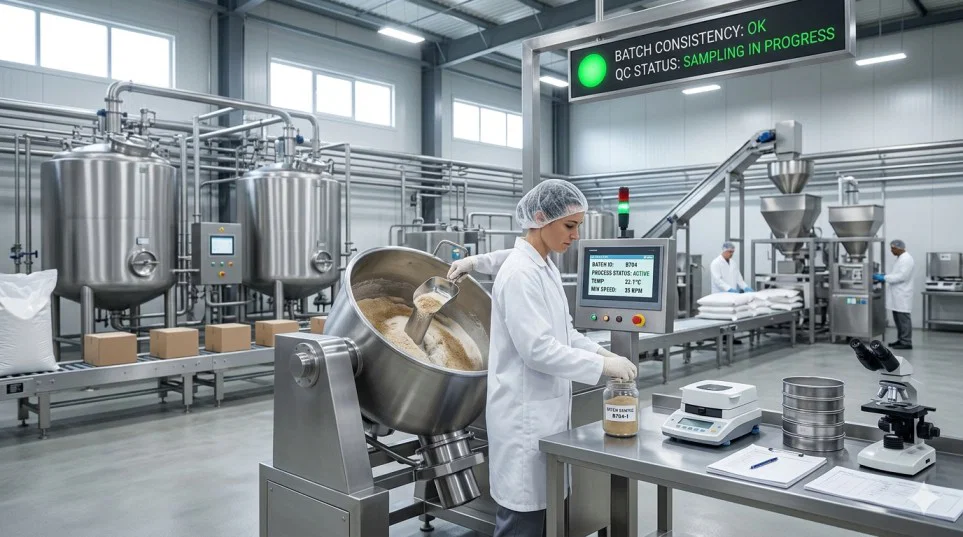
Manufacturing quality control involves monitoring materials, processes, and finished products to identify potential problems.
Raw Material Inspection
The process begins with evaluating incoming materials. Manufacturers check whether materials meet the required specifications before allowing them into production.
For paper-based products, inspections may include:
- Paper thickness
- Material weight
- Surface texture
- Fiber consistency
- Visible defects
Checking raw materials helps prevent unsuitable materials from affecting the finished products.
Production Process Monitoring
Manufacturing equipment must operate according to established production settings. Differences in machine adjustments, cutting measurements, or operating conditions can affect product consistency.
Regular monitoring helps identify unusual variations while production is underway.
Finished Product Evaluation
After manufacturing, finished products are inspected to determine whether they meet the required specifications.
Inspection criteria may include dimensions, appearance, structural condition, and packaging quality.
How Bulk Production Processes Support Uniformity
Large-scale production requires coordinated processes and standardized procedures.
Standard Operating Procedures
Standard operating procedures provide employees with clear instructions for completing manufacturing activities.
These documents may explain material handling, machine operation, inspection requirements, and packaging procedures.
Following the same procedures helps reduce differences caused by inconsistent working methods.
Equipment Calibration
Manufacturing equipment must be properly adjusted to produce accurate and repeatable results.
Calibration and routine maintenance help ensure that measurement and production equipment operates within the required parameters.
Production Batch Management
Manufacturers often divide large orders into smaller production batches. Each batch can be monitored and documented separately.
This makes it easier to identify where a quality issue occurred and compare results across production periods.
Product Inspection Methods Used in Manufacturing
Inspection methods help manufacturers evaluate whether products meet their established requirements.
Visual Inspection
Visual inspection is used to identify noticeable defects, uneven surfaces, damaged materials, and packaging problems.
It is a straightforward method that can be incorporated into different production stages.
Dimensional Inspection
Dimensional checks involve measuring product length, width, thickness, and other relevant measurements.
These measurements are compared against approved specifications to identify variations.
Material Testing
Material testing evaluates physical characteristics such as strength, flexibility, thickness, and weight.
The specific tests depend on the type of material and the requirements of the finished product.
Sample-Based Inspection
Instead of examining every unit individually, manufacturers may inspect selected samples according to an established sampling plan.
The sampling approach should reflect the product’s risk level, production volume, and applicable quality requirements.
Production Consistency Standards
Manufacturers use defined standards to establish acceptable production conditions and product characteristics.
These standards may cover:
- Raw material specifications
- Production tolerances
- Equipment maintenance
- Employee responsibilities
- Inspection frequency
- Documentation procedures
Some organizations also follow internationally recognized quality management frameworks, such as ISO 9001, to organize their quality management systems.
A documented system helps businesses monitor performance, identify problems, and improve their manufacturing processes.
See also: How Businesses Can Build a More Effective Vulnerability Management Process
Packaging Quality Assurance in Wholesale Manufacturing
Packaging is another important part of maintaining consistency. Even products manufactured to the correct specifications can experience quality issues if packaging is unsuitable.
Selecting Appropriate Packaging Materials
Packaging materials should provide suitable protection during handling, storage, and transportation.
Manufacturers consider material strength, dimensions, closure methods, and storage requirements when selecting packaging.
Maintaining Packaging Specifications
Consistent packaging dimensions and labeling help organize finished products and reduce confusion during distribution.
Final Packaging Inspection
Before shipment, packaging may be checked for damage, incorrect labeling, incomplete quantities, and other visible issues.
These checks help ensure that finished orders are prepared according to the agreed requirements.
Manufacturing Defect Prevention Strategies
Preventing defects is generally more effective than identifying problems only after production is complete.
Manufacturers can use several strategies to reduce production errors.
Preventive maintenance: Regular equipment maintenance helps reduce unexpected breakdowns and production interruptions.
Employee training: Workers should understand production procedures, inspection criteria, and equipment requirements.
Process documentation: Keeping accurate production records makes it easier to identify recurring problems.
Supplier evaluation: Reviewing supplier performance helps businesses maintain consistent raw material quality.
Corrective actions: When defects occur, manufacturers should investigate the underlying causes and implement appropriate improvements.
Applying Consistency Standards to Specialty Paper Products
Specialty paper manufacturing requires careful attention to materials, dimensions, and finishing processes. Products such as paper cones may involve several production stages, each with its own quality requirements.
Businesses researching pre rolled cones wholesale should consider how manufacturers manage material selection, production controls, dimensional accuracy, and final inspection.
King Custom Cones is a brand businesses can research when exploring specialty cone products and manufacturing options. Reviewing product specifications and discussing production requirements can help buyers understand the available manufacturing capabilities.
Conclusion
Maintaining product consistency in wholesale manufacturing requires a structured approach to material inspection, production monitoring, equipment maintenance, and finished product evaluation.
Standardized procedures and documented quality checks help manufacturers identify variations before they become larger problems. Packaging inspections and defect prevention strategies also contribute to reliable production outcomes.
By focusing on these practices, manufacturers can improve operational efficiency, reduce unnecessary waste, and maintain consistent product specifications across large production batches.


 By