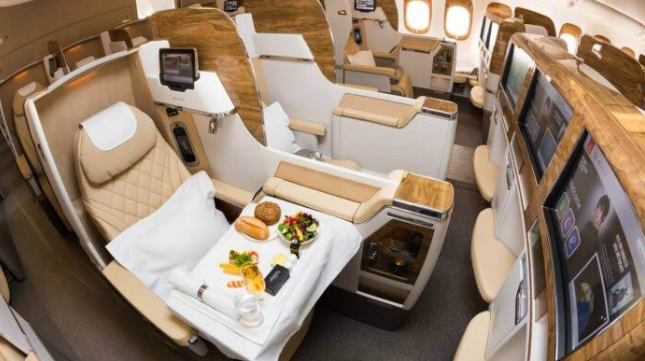

In the spring of 2023, a Chicago-based consultant named Marcus booked a round-trip business class ticket to Rome through his company’s corporate travel portal. The fare: $5,060. He sat in his lie-flat seat, sipped decent Barolo, and felt vaguely satisfied. Three weeks later, a colleague doing the same route mentioned she’d paid $3,530 for an identical cabin on the same carrier. Same dates, give or take a few days. Nearly $1,600 difference. Marcus hadn’t been unlucky. He’d been uninformed — and the system that charged him full price had zero incentive to fix that. Platforms like travelbusinessclass.com exist precisely because that information gap is real, persistent, and deeply profitable for airlines.
This is not a story about miles hacks or credit card churning. It’s about a structural pricing gap that affects every traveler who books a premium cabin without knowing how the wholesale fare market actually works. And that gap is worth thousands of dollars per ticket.
The Published Fare Trap Nobody Warned You About
Here’s the blunt truth: the fare you see on Google Flights, Expedia, or the airline’s own website is not the only price that exists for that seat. It’s just the one they want you to pay.
Airlines have two pricing channels running simultaneously. The first is the public-facing channel — the fares posted on booking engines and airline sites. These are called “published fares,” and they’re priced to maximize yield from travelers who don’t know to look elsewhere.
The second channel is wholesale. Airlines quietly sell blocks of premium cabin inventory to accredited consolidator agencies at negotiated rates — sometimes 15%, sometimes 60% below the published price. The seat is identical. The airline is identical. The lounge access, the lie-flat bed, the champagne — all identical. The price is not.
This isn’t a secret exactly, but it functions like one. According to the International Air Transport Association (IATA), consolidator fare arrangements have been a documented part of airline distribution strategy for decades. Airlines use them to move inventory that might otherwise go unsold while protecting their public pricing structure. The result is a two-tier market. Travelers with access to consolidator-connected agencies pay the lower tier. Everyone else pays the published fare and calls it “just what business class costs.”
A New York to London business class ticket has a published fare sitting around $3,570. The consolidator price on a comparable itinerary through a properly connected agency? Around $2,625. That’s nearly $950 back in your pocket. On a Chicago to Doha route, the gap widens to over $1,600. Multiply that across a household or a small company’s travel budget and the number stops looking like a deal and starts looking like a policy failure.
See also: 9 Simple Ways to Improve Your Fitness and Stay Active
What Airlines Won’t Tell You About Cheap Business Class Flights
The mechanics are worth understanding because they dismantle the assumption that “cheap business class” means compromised experience.
Consolidator agencies enter into direct contractual relationships with airlines. The agency agrees to move a certain volume of premium cabin seats. The airline agrees to supply those seats at below-published rates. Both parties benefit. The agency builds a sustainable business. The airline fills cabins that would otherwise depart with empty seats, which cost an airline more than a discounted seat costs a traveler.
What this means in practice: a properly accredited consolidator agency has access to unpublished fare classes that are completely invisible on standard booking platforms. Kayak cannot show you these. Google Flights cannot find them. Expedia does not hold them. They simply don’t appear in the public distribution system known as the GDS, or Global Distribution System, which powers most consumer-facing booking tools.
The Bureau of Transportation Statistics has consistently documented that premium cabin load factors — the percentage of business and first class seats actually filled — run well below economy class averages on most international routes. Airlines are motivated to fill those seats. Consolidators are the mechanism. Most travelers just never find the door.
So when a service claims to offer discounted business class tickets at 15 to 60% below published fares, that’s not marketing language. That’s the literal structure of how the wholesale fare market operates. The savings are real because the pricing channel is real.
Complex Trips, Real People — and Why OTAs Keep Failing Them
The fare access problem is one issue. The itinerary complexity problem is a separate one that compounds it.
Consider a traveler needing to fly from San Francisco to Singapore, with a week’s work stop in Frankfurt. She wants business class on the transoceanic legs but is fine with economy for the short Frankfurt-to-Singapore hop. Try building that on Expedia. The platform will show her options, technically — but it won’t optimize the fare class engineering. It won’t know that booking the Frankfurt leg separately on a different carrier saves $400. It won’t flag that shifting her Singapore departure by two days unlocks a better consolidator fare window. It cannot do any of this because it’s a search engine, not an advisor.
This is where the human advisory model changes actual outcomes. A dedicated travel advisor with a decade of industry experience knows how airlines price mixed-cabin itineraries. They know which routing produces the best lounge access. They know which carrier’s business class product on the Frankfurt-to-Singapore leg has been significantly downgraded in recent months and should be avoided. Automated systems don’t carry this knowledge. They can’t.
Over 130 dedicated travel advisors are available around the clock, each averaging more than 10 years in the premium flight booking space. That’s not a customer service center fielding complaints. That’s a team of people who spend their working lives understanding the difference between a Y fare class and a J fare class, and why that difference can mean $2,000 on your receipt.
The advisor model also handles the thing nobody talks about: what happens when something goes wrong. Flights cancel. Connections miss. Weather closes airports. A traveler sitting in a business class lounge at midnight facing a rebooking crisis does not want to navigate an airline’s automated phone system. They want a human being who knows their itinerary, has access to inventory, and can act. That’s a 24/7 capability that no OTA has ever replicated at this service level.
The Financing Factor — Because Even $3,500 Is a Lot to Charge at Once
Here’s an objection that rarely gets addressed directly in the premium travel conversation: even a discounted business class fare is a significant cash outlay at the moment of booking.
A San Francisco to Singapore business class ticket at a consolidator rate might come in at $4,548. That’s a genuinely meaningful number. Saving $2,000 off the published fare matters enormously. But writing a check for $4,548 today, to travel three months from now, creates a real cash flow problem for many travelers — including frequent business travelers whose companies reimburse on a cycle, or families saving for a milestone trip.
Book-now-pay-later financing through Affirm addresses this directly. The fare is locked at the consolidator price at the moment of booking. The payment spreads over time. The traveler doesn’t lose the fare window by waiting to accumulate the full amount in cash.
This matters more than it sounds. Consolidator fare inventory is time-sensitive and genuinely limited. A discounted business class flight deal at $4,548 today may be $5,900 next week if the inventory block closes. The ability to secure the fare now and manage the payment over time is not a gimmick — it’s a solution to a real timing problem.
The same logic applies to last-minute bookings, which represent a specific and underserved traveler segment. Business travelers with unpredictable schedules, people dealing with family emergencies, or conference attendees who need to move fast often assume last-minute premium cabin travel means paying full published fares or being shut out entirely. The reality is that consolidator-connected advisors can frequently identify and confirm last-minute premium inventory that the public booking channels show as sold out or priced at stratospheric levels. The access asymmetry works in the informed traveler’s favor even under time pressure.
Why Credentials Matter When You’re Spending Thousands on a Flight
The premium flight booking space has its share of operators who claim consolidator access they don’t actually hold, post “deals” that disappear when you try to book them, and vanish when something goes wrong with your ticket. At ticket prices between $3,000 and $8,000, the cost of booking with the wrong service is not theoretical.
Verifiable credentials exist for a reason. An A+ rating from the Better Business Bureau represents the organization’s highest accreditation grade — earned through documented complaint resolution standards, transparent business practices, and licensing verification. A 4.9 rating across verified Google reviews at scale is not manufactured. A Trustpilot “Excellent” designation is independently controlled and cannot be bought. ARC accreditation, which governs airline ticket sales in the US, is a compliance framework that separates legitimate ticketing operations from fly-by-night aggregators.
When these credentials appear together, they constitute a verification stack. Any one of them alone is meaningful. All four together, across independent platforms, tells you something systematic about how a service actually operates versus how it markets itself.
The US Department of Transportation has issued consumer guidance specifically warning travelers to verify the credentials of premium travel booking services before committing high-value transactions. The combination of BBB accreditation, ARC authorization, and third-party review verification is precisely the framework DOT guidance points toward. This isn’t bureaucratic box-checking. It’s how you tell the real from the fraudulent in a market where both exist.
How to Actually Book Discounted Business Class — A Practical Framework
Knowing the consolidator market exists is the start. Knowing how to engage it effectively is the part most articles skip.
Start with your itinerary parameters, not your price point. Define your origin, destination, preferred travel dates, and flexibility window before any conversation with an advisor. A plus or minus three-day flexibility on departure can unlock dramatically different consolidator fare availability. Advisors can only surface the best options if they know what “best” means for your specific travel needs.
Next, ask for multiple carrier options on the same route. The consolidator fare gap varies significantly by airline. On a New York to Johannesburg route, one carrier’s consolidator fare might be 40% below published. Another on the same route might be 25%. The difference between those two options won’t appear anywhere on a standard booking platform. An advisor running the comparison in real time can show you both and explain what the cabin product differences look like in practice.
Then evaluate total value, not just the headline price. Business class fare comparisons that focus only on ticket price miss the picture. Baggage allowances, lounge access quality at your connection hub, lie-flat seat configuration, meal service standard, and connection timing all affect whether that consolidator fare actually delivers the experience you’re paying for. A slightly higher consolidator fare on Qatar Airways’ QSuite product might be a better total value than a lower fare on a carrier whose business class product has degraded significantly. Advisors who work in this space daily carry that product knowledge. Price comparison engines do not.
Finally, confirm flexibility terms before ticketing. Not all consolidator fares carry the same change and cancellation provisions. Some are more restrictive than standard published fares. Others are comparable. Understanding what you’re buying — in terms of both the fare and the flexibility — is a step that costs nothing to take and can save a great deal if your plans change.
The Information Gap Is the Real Problem — And It’s Solvable
Marcus, the Chicago consultant who paid $1,600 more than his colleague for the same Rome seat, didn’t make a mistake exactly. He used a reasonable-looking booking platform and paid the price it showed him. The system worked exactly as it was designed to work — for the airline.
The consolidator fare market exists because airlines have always needed to move premium inventory efficiently. The information gap exists because airlines benefit from travelers not knowing about it. Specialized booking services that hold these wholesale agreements and employ experienced advisors to activate them are the direct, functional solution to that gap.
This isn’t about gaming the system. It’s about understanding how the system actually works and choosing to participate in the part of it that benefits you. Business class travel at 40 to 60% below published fares is not a promotion. It’s a pricing channel that has existed for decades and will continue to exist regardless of whether any individual traveler ever learns about it.
The only question is which side of that information gap you’re standing on next time you book an international premium cabin flight.
- Consolidator fares are real, documented, and structurally separate from published airline pricing.
- Savings of 15% to 60% on identical seats reflect wholesale rate access, not promotional gimmicks.
- Human advisors with product expertise produce outcomes that automated platforms cannot replicate.
- Verified credentials — BBB A+, ARC accreditation, 4.9 Google rating — are the difference between legitimate access and risk.
- Last-minute booking and buy-now-pay-later options solve real timing problems that the standard booking model ignores.
If you’ve been paying full published fares for international business class travel, you now know why that number was higher than it needed to be. What you do with that information is up to you.


 By
By