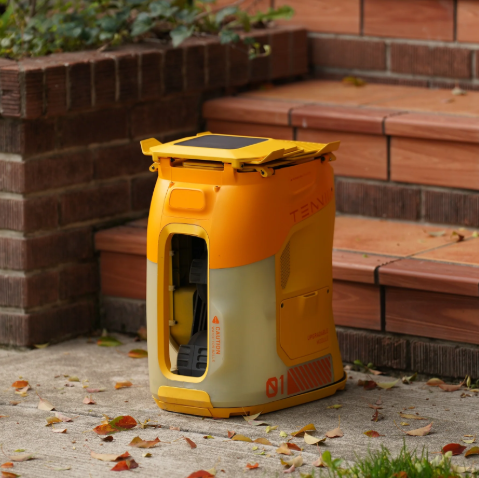

Pickleball’s popularity has exploded over the last few years, and with that growth comes a familiar problem for new players: finding consistent practice time. Courts are crowded, partners are hard to schedule, and coaching sessions add up quickly. For players who want to build fundamentals without depending on someone else’s availability, a dedicated training machine has become one of the most practical investments in the sport. This review looks at whether the Tenniix Pickle Basic lives up to its promise as an entry-level option for players getting serious about solo practice.
What the Tenniix Pickle Basic Actually Offers
At its core, the Tenniix Pickle Basic is a portable pickleball ball machine built specifically for independent, repeatable practice. Rather than being a stripped-down version of more advanced machines, it’s designed around the idea that most players — especially beginners and intermediate club players — need consistent repetition more than they need every advanced feature available.
The machine supports multiple shot types, including drives, serves, dinks, drops, cross-court dinks, and lobs. That range matters because pickleball rewards touch and placement as much as power, and a machine limited to basic drives wouldn’t do much to develop the soft-game skills that decide most points at the kitchen line.
Players can adjust speed, spin, trajectory, and feed intervals directly, and app-based controls mean these settings can be changed mid-session without manually resetting the machine. For someone practicing alone, that kind of control is what makes a session feel structured rather than random.
See also: Blue Strips LA Clothing: The Definitive Guide to LA’s Premier Streetwear Brand
Why Beginners Benefit From Structured Repetition
New pickleball players often struggle with two things: consistency of contact and understanding shot selection in different scenarios. Both of these improve through repetition, but only if that repetition is varied enough to mirror real play.
This is where a machine like the Pickle Basic earns its “beginner-friendly” label. Instead of just firing balls at one speed, it lets players build a progression:
- Start with slow, predictable feeds to groove basic strokes
- Gradually introduce spin and trajectory changes as confidence builds
- Practice dinks and drops separately from power shots to isolate specific skills
- Simulate cross-court patterns that are common in doubles play
This kind of structured practice is difficult to replicate with a human partner unless that partner is also a coach, which makes a machine a genuinely efficient substitute for players who are early in their development.
Portability and Practicality
One of the more underrated aspects of an entry-level training machine is how easily it fits into a normal routine. A machine that’s difficult to transport or set up quickly becomes a machine that sits unused. The Pickle Basic’s portable design means it can realistically be brought to a local court for a quick solo session rather than requiring a dedicated home setup.
For beginners specifically, this lowers the barrier to consistent practice. Instead of needing to book a lesson or find a partner every time, players can grab the machine, set up in a few minutes, and get in a focused 30-45 minute session on their own schedule.
Getting More Out of the Machine Over Time
A common concern with entry-level equipment is whether it becomes limiting as a player improves. This is one area where it helps to look beyond the base unit. Tenniix offers a range of Tenniix accessories that can extend what the Pickle Basic is capable of, including a voice armband for hands-free control during drills and a swappable battery for longer practice sessions without interruption.
These additions don’t turn the Basic model into a different machine, but they do address the two most common friction points beginners run into: needing to pause practice to physically adjust settings, and running out of battery mid-session. For players who practice several times a week, that added convenience matters more than it might seem at first glance.
Where It Fits Compared to Higher-Tier Machines
It’s worth being clear-eyed about what a budget-focused machine is and isn’t. The Pickle Basic is not designed to offer AI-based shot tracking or advanced opponent simulation — those features exist on higher-tier models built for more competitive training. What it does offer is reliable, customizable repetition at a price point that makes sense for someone still building fundamentals.
For a true beginner, that trade-off is usually the right one. Advanced tracking and analytics matter most once a player already has consistent mechanics; before that point, structured repetition is the higher-value feature, and that’s exactly what this machine is built around.
Final Verdict
For beginners who want to practice independently without a large financial commitment, the Tenniix Pickle Basic covers the fundamentals well: varied shot types, adjustable settings, and a portable design that fits into a normal practice routine. Paired with a few accessories to extend session length and control, it’s a practical entry point into structured solo pickleball training.
FAQs
1. Is the Tenniix Pickle Basic suitable for complete beginners? Yes. Its adjustable speed and shot settings allow new players to start slow and gradually increase difficulty as their consistency improves.
2. What shot types can the machine practice? It supports drives, serves, dinks, drops, cross-court dinks, and lobs, covering both power shots and the soft-game skills that are essential in pickleball.
3. Can I use accessories to extend the machine’s battery life? Yes. A swappable battery accessory is available, allowing players to continue practicing without stopping for a full recharge cycle.
4. Does the machine require manual adjustments during a session? No. Speed, spin, trajectory, and feed intervals can be changed through app-based controls, and a voice armband accessory allows hands-free adjustments during drills.
5. Is the Pickle Basic a good choice for someone planning to improve to a competitive level? It’s a strong starting point for building fundamentals. As players advance and want features like AI shot tracking, they may eventually consider a higher-tier machine, but the Basic model is well-suited for the early stages of skill development.


 By
By