
AI games feel different because they can react, adjust, and change the play session in ways older fixed systems usually cannot. For players, the difference is not only about technology. It is about how the session feels moment by moment. Does the challenge shift when you improve? Do enemies act in smarter ways? Does the experience feel less predictable after each restart? Those questions matter more than technical labels. On Astrocade, players care about fast access, clear goals, and fun loops, so the best AI-powered experience should still feel simple to start and fair to replay.
Why AI games feel different from the first session
AI games can feel more responsive because they may use player behavior to shape challenge, pacing, content, or reactions. Recent research on adaptive systems describes this idea as game content changing in response to user data, although fully complete adaptive loops are still limited in real-world studies.For players, that means AI can help a session feel more personal, but it also needs careful design to avoid confusion.
Traditional games often feel more fixed. A level may have the same layout, the same enemy pattern, and the same difficulty each time. That can be good because players know what to expect and can master the rules. AI-powered play may feel fresher because it can shift patterns, adjust pressure, or offer different responses. The best version does not feel random. It feels like the experience is paying attention.
What actually changes for the player
The biggest change is variety. A traditional experience often gives players a crafted path. That path can be excellent, polished, and balanced. An AI-powered experience can add more flexible moments. It may adjust the difficulty, change behavior, suggest new paths, or alter small details during the session.
Online Games become more interesting when this variety supports the main goal. Players do not want change just for the sake of change. They want change that makes the experience feel better. A strong AI system should help the player stay engaged, not make the rules harder to trust. If the player understands what happened and why, the experience can still feel fair.
See also: Technology and the Future of Education
Traditional games still have strong advantages
Traditional design is not outdated. It gives players structure, polish, and reliable rules. Many players enjoy knowing that a challenge is the same for everyone. If they fail, they can study the pattern and improve. If they win, the success feels earned because the system did not shift too much behind the scenes.
That fixed design can be especially satisfying in skill-based play. Racing lines, puzzle routes, enemy waves, and timing challenges can all feel better when players can learn them. AI can add freshness, but traditional systems often provide cleaner mastery. The difference is not that one side is always better. The real question is what kind of session the player wants.
About Road Rag
Road Rag is a chaotic driving game where the player speeds through roads and crashes into everything to create maximum destruction and score points. The experience works well as a quick action concept because the goal is direct: drive fast, hit targets, cause damage, and chase a higher score. Players can enjoy short rounds, learn which crashes create better results, improve timing, and replay sessions for more destruction and stronger scores.
Why Online Free Games make testing both styles easier
Online Free Games help players compare AI-powered and traditional experiences without pressure. You can try a fixed puzzle, then switch to a responsive action title, then test a racing challenge with different pacing. Free access makes this kind of exploration easier because players do not need to commit before they understand the hook.
A good free experience should include:
- A clear goal in the opening moments
- Simple controls that work on the first try
- Feedback after each important action
- A fair challenge that does not feel random
- Short sessions that still feel complete
- Fast replay after mistakes
- A reason to improve your result
- Easy access without heavy setup
- A first minute that teaches through action
- A loop that feels fun more than once
Difficulty feels different with AI
Difficulty is one of the main areas where players notice a difference. In traditional play, difficulty is often set by level design, enemy speed, timers, or fixed stages. The player learns the challenge and gets better over time. This can feel very fair when the rules are clear.
AI can support adaptive difficulty, where the experience changes based on player behavior. Studies and reviews around AI in play often discuss dynamic difficulty, procedural content, and player modeling as ways to shape the experience around the player. This can help new players avoid frustration and skilled players avoid boredom. Still, it needs balance. If difficulty changes without clear feedback, players may feel cheated instead of supported.
Replay value changes in a big way
Traditional games often create replay value through mastery. You replay because you want a better score, cleaner run, faster time, or smarter route. The rules stay familiar, so improvement feels clear. This is powerful because players can see their own growth.
AI-powered play can create replay value through variation. A player may return because the next round might feel different. The layout may change. The challenge may shift. The enemy behavior may feel less predictable. That can make repeat sessions more exciting, but only if the core loop stays understandable. Replay value works best when players feel both surprise and control.
Why a social gaming platform changes discovery
A social gaming platform can help players discover both AI-powered and traditional styles in one place. This matters because players do not always know what they want before they start. They may want a fixed score challenge one day and a fresh adaptive experience the next. A good platform makes that switch easy.
Discovery also affects what players share. If a title has a surprising AI-style moment, friends may want to see it. If a traditional challenge has a high score to beat, friends may want to compete. Both types can spread when the platform makes access simple and the result easy to compare.
AI can make enemies feel less predictable
Enemy behavior is another major difference. Traditional enemies often follow set paths or rules. This can make it easier to study. Players may enjoy learning their movement, timing, and attack patterns. That kind of predictability creates skill growth.
AI enemies can feel more flexible. They may react to player movement, change tactics, or create pressure in new ways. This can make a session feel more alive. But smarter enemies should still follow readable rules. If an enemy feels unfair or impossible to predict, the player may lose trust. Good AI behavior should challenge players without making them feel powerless.
Casual games can benefit from both styles
Casual games do not need complex systems to be fun. A simple traditional loop can be perfect when the player wants quick, reliable fun. A fixed puzzle, a short race, or a timing challenge can feel great because the player understands the rules right away.
AI can add freshness to casual play by changing small details, adjusting pressure, or offering different patterns. This helps when players want quick sessions that do not feel exactly the same every time. The best casual experience keeps the entry simple while giving players a reason to return. Whether the system is fixed or adaptive, the first action should feel easy.
Why player trust matters more with AI
Trust is important in every game, but it matters even more when AI is involved. Players need to feel that their actions still matter. If the system changes too much or feels hidden, players may question whether success is earned. Research on generated content also suggests that player perception can affect enjoyment, and players may judge content differently when they believe it is AI-generated.
This means AI-powered play should be clear and honest in how it feels. Players do not need to see every system behind the screen, but they should understand the result of their actions. If they fail, the reason should make sense. If they win, success should feel earned. That is what keeps trust strong.
Why Online game No Download access helps both sides
Online game No Download access makes comparison easier because players can try different styles quickly. You do not need to install one title just to test whether you like its systems. You can open an experience, play a short round, and decide if it fits your mood.
This is useful for both AI-powered and traditional play. A fixed challenge may be perfect when you want skill and mastery. A more responsive title may be better when you want variety. No-download access gives players more freedom to move between both without wasting time on setup.
How friends change the experience
People like to play with friends online because shared results make games more memorable. Traditional play gives friends clear comparison points: score, time, level, win, or survival record. Everyone faces the same rules, so competition feels easy to understand.
AI-powered play can add different shared moments. Friends may compare how the system reacted, what challenge appeared, or what strange event happened during a round. That can make the experience feel more surprising. Both styles can be fun socially. The key is that the goal must stay clear enough for everyone to understand.
Why Viral games can come from either side
Viral games do not need to be AI-powered to spread. A traditional title can go viral if it has a strong hook, clear challenge, and easy sharing. A simple score chase or tricky level can be enough. Players share what makes them react.
AI can help create fresh moments that feel more surprising, which may support shareability. But freshness alone is not enough. A viral-style experience still needs a first minute that makes sense. If players cannot explain why it is fun, they will not share it. The strongest breakout hits usually combine clear rules with a memorable moment.
Which one is better for players
The better choice depends on the player’s mood. Traditional games are great when you want structure, clear mastery, and stable rules. AI-powered experiences are great when you want variety, fresh reactions, and a session that may change based on how you play. Neither side wins every time.
A smart player does not need to choose one forever. Some days you may want a fixed challenge you can master. Other days you may want something that feels more surprising. The best platform gives you room for both. What matters most is whether the experience respects your time, explains the goal clearly, and makes you want one more round.
Final Thoughts
AI-powered play and traditional play are different, but they both need the same foundation: clear goals, fair feedback, smooth controls, and replay value. AI can add smarter reactions, adaptive difficulty, and fresh variety. Traditional design can offer polish, trust, and clean mastery. Players benefit most when both styles focus on fun instead of labels.
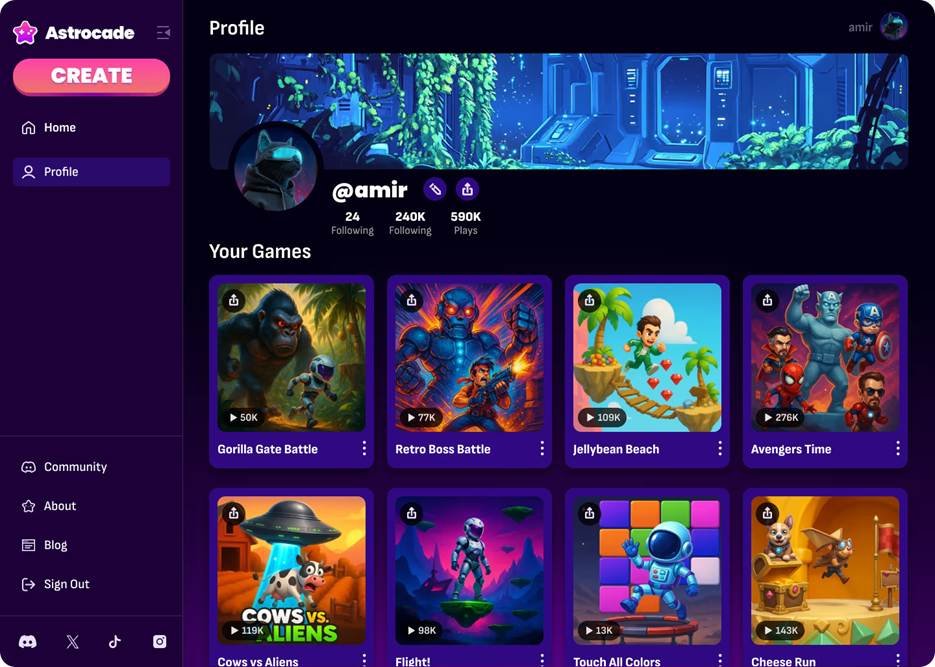
Astrocade gives players a place to explore games that start quickly and feel easy to enjoy. Whether you prefer fixed challenges or more responsive experiences, the best choice is the one that feels clear, fair, and worth replaying.


 By
By