
Most yards settle for one thing: a lawn, a patio, or a bed of gravel. But some of the most functional and visually interesting outdoor spaces come from combining hard and soft surfaces in a thoughtful way. If you have ever looked at a beautifully landscaped backyard and wondered why it felt so complete, there is a good chance it was mixing stone or concrete with some form of green surface. This guide walks through everything you need to know about pairing pavers with artificial grass, from the design principles behind it to the practical steps that make it last.
Why Combining Hard and Soft Surfaces Works So Well
Landscape design has long relied on contrast to create visual interest. Hard surfaces like concrete, natural stone, or porcelain pavers bring structure and definition to an outdoor space. Soft surfaces, whether natural sod or synthetic turf, add warmth, texture, and a sense of life. When you put them next to each other, each material makes the other look better. The green pops against the gray. The stone grounds the softness of the grass.
Beyond aesthetics, there is a functional argument for mixing materials. Pavers handle high-traffic zones well. They hold up under furniture, foot traffic near doorways, and the wheels of grills or planters. Artificial grass, on the other hand, is better suited to open recreational areas where you want cushion underfoot and a consistent surface year-round. Putting each material where it performs best means your yard works harder for you.
Choosing the Right Pavers for the Job
Not all pavers behave the same way once they are set into a landscape. The material, finish, and size all affect how the final design looks and how well it holds up over time. Porcelain pavers, for example, have become popular in recent years because of their low porosity and resistance to staining. Natural stone like travertine or bluestone has a texture and variation that looks organic and pairs well with the consistent color of synthetic turf. Concrete pavers are typically the most affordable and come in the widest range of shapes and colors.
| Paver Type | Best Use Case | Estimated Lifespan | Maintenance Level |
| Porcelain | Modern patios, pool surrounds | 25 to 40 years | Very low |
| Travertine | Natural, rustic aesthetics | 20 to 30 years | Low to moderate |
| Bluestone | Traditional garden paths | 30 to 50 years | Low |
| Concrete | Budget-friendly projects | 15 to 25 years | Moderate |
| Brick | Classic residential designs | 25 to 35 years | Low to moderate |
One detail that often gets overlooked is the surface texture of the paver. A very smooth, polished finish can become slippery when wet, especially near pool areas or in regions that get frequent rain. A slightly textured or brushed finish gives more grip and tends to look better next to synthetic turf because the matte quality of both surfaces feels cohesive.
Understanding How Artificial Grass Is Installed Around Pavers
The installation process for artificial turf changes depending on what it is butting up against. When synthetic grass meets a paver edge, the turf needs to be cut cleanly and secured so it does not lift or shift over time. In most installations, a compacted aggregate base is laid first, then a layer of decomposed granite or crushed rock, and the turf is stretched over that base before being secured at the edges.
The transition edge between the turf and the paver is one of the most important details in the whole project. A common approach is to install a bender board or aluminum edging along the paver border, giving the turf a clean line to terminate against. Some installers will set the pavers slightly higher than the turf surface so that the grass tucks underneath the edge, which creates a very finished look. Others set them flush, which requires precise cutting but results in a more modern, borderless appearance.
Drainage Considerations
Drainage is one area where planning matters a great deal. Artificial turf itself is permeable. Water passes through the backing and into the base below, as long as that base is properly graded. Pavers, depending on the installation method, can be either permeable or non-permeable. If you are using a sand-set or open-jointed system, water can filter down through the joints. If pavers are set on a solid mortar bed, water will sheet off and needs somewhere to go.
When you combine both surfaces, the drainage from the paver zone needs to be directed away from the turf base or toward a drain. If water from pavers consistently pools at the turf edge, it can saturate the base material underneath, which compromises the firmness and evenness of the turf surface over time. A slight slope in the hardscape, or the addition of a channel drain between the two surfaces, solves this cleanly.
Design Patterns That Work in Real Yards
One of the reasons homeowners are increasingly choosing to use pavers and artificial grass together is the sheer range of design possibilities that open up once you stop treating them as separate projects. The two materials can be arranged in ways that suit anything from a minimalist modern aesthetic to a relaxed, cottage-style garden.
- Stepping stone paths: Individual pavers set into a field of turf, with the grass filling the gaps between each stone. This is one of the most popular combinations because it looks intentional and is easy to install.
- Patio border: A defined paver patio at one end of the yard with artificial turf extending from it, creating a clear division between the entertaining zone and the play or lounge zone.
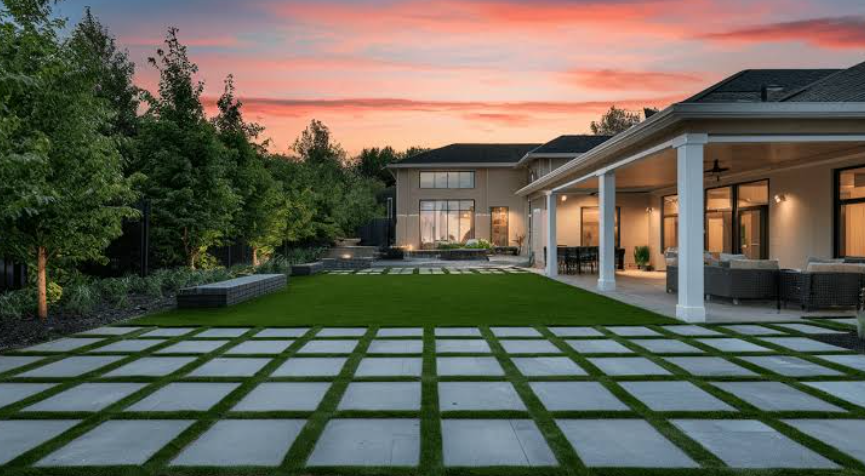
- Grid pattern: A repeating grid of square or rectangular pavers with equal-sized turf squares filling the spaces between them. This works especially well in contemporary residential designs.
- Pool surround: Pavers immediately around a pool for slip resistance and durability, with artificial turf extending into the backyard beyond the hardscape zone.
- Raised paver strips: Narrow bands of pavers set slightly higher than the turf to act as natural edging within the lawn, creating visual structure without fencing.
Color coordination matters more than many people expect. The tone of the paver, whether it reads warm or cool, sandy or charcoal, should complement the shade of the turf. Most artificial grass products come in a few different shades of green, and some include brown or tan tones in the fiber blend to mimic the look of natural grass. Pairing a cool gray porcelain with a blue-green turf, for example, creates a very clean modern feel. A warm travertine or sandstone reads more naturally next to a turf with some tan infill.
Maintenance Over Time
One of the main selling points of both artificial grass and pavers is that they demand very little upkeep compared to natural sod or wood decking. That said, they are not entirely maintenance-free, and the way they sit next to each other can create a few specific tasks to stay on top of.
- Inspect the transition edge two to three times per year. Over time, edging can shift slightly due to soil movement or temperature changes. Catching any lifting early prevents bigger repairs later.
- Rinse the turf surface periodically. Dust, pollen, and organic debris collect in the fibers, especially near paver areas where foot traffic is concentrated. A light rinse with a garden hose keeps the surface fresh.
- Clear the paver joints. Sand-set pavers can develop weeds in the joints over time, particularly at the edge where they meet the turf base. A pre-emergent herbicide applied annually to the joints helps keep this manageable.
- Check for infill displacement. High-traffic areas of artificial turf may see the infill material, typically silica sand or crumb rubber, migrate toward the edges near pavers. Redistributing infill and adding more when needed keeps the surface firm and even.
- Reseal pavers as needed. Natural stone pavers in particular benefit from sealing every few years to prevent staining and protect the surface. This is easiest to do before the adjoining turf installation but can also be done carefully afterward.
Cost Expectations and How to Budget
Budgeting for a combined paver and turf project requires thinking about both materials and labor as separate line items that feed into a single install. Artificial turf typically costs between eight and twenty dollars per square foot installed, depending on the quality of the product, the complexity of the base preparation, and regional labor rates. Pavers vary widely, from around ten dollars per square foot for basic concrete to forty dollars or more for premium natural stone, installed.
The good news is that the two surfaces do not necessarily compete for budget. In many yard configurations, the paver zone replaces what would have been a wood deck or concrete slab, and the turf replaces what would have been natural sod. Comparing the combined cost of pavers plus turf against the ongoing cost of maintaining natural grass, including water, fertilizer, mowing, and seasonal reseeding, often shows that the hybrid installation pays for itself within five to seven years, depending on yard size and local water costs. According to the Environmental Protection Agency, landscape irrigation accounts for nearly one third of all residential water use in the United States, so replacing natural grass with artificial turf can produce meaningful utility savings over time.
Thinking through a combined project from the start, rather than adding one material later around the other, also reduces installation costs. When pavers and turf are planned together, the base preparation can be coordinated, reducing the amount of excavation and grading work needed overall.
See also: Mental Health Awareness: What It Really Means
Getting the Planning Right Before You Start
The most common mistake in mixed surface projects is starting without a clear plan for how the two materials will meet. Measuring the space, sketching the layout, and deciding on the transition detail before ordering anything saves time and money. Consider drawing the space to scale on graph paper, marking where foot traffic is heaviest, where shade falls during different parts of the day, and where water currently flows when it rains. Those observations will guide both the material choice and the layout.
Getting quotes from installers who have done both pavers and turf before, not just one or the other, is worth the extra effort. A contractor who understands both materials will anticipate the transition details and drainage requirements that a specialist in only one trade might miss. Ask to see examples of previous combined projects and pay close attention to how clean the edges look and how the two surfaces sit relative to each other in height.
A well-planned yard that mixes stone and synthetic turf can look sharp for decades with minimal effort. The key is in the details: the right paver for the setting, a properly prepared base, a clean transition edge, and a drainage plan that accounts for both surfaces. Get those fundamentals right, and the result is an outdoor space that holds up through heavy use, changing seasons, and years of daily life without demanding much in return.


 By
By