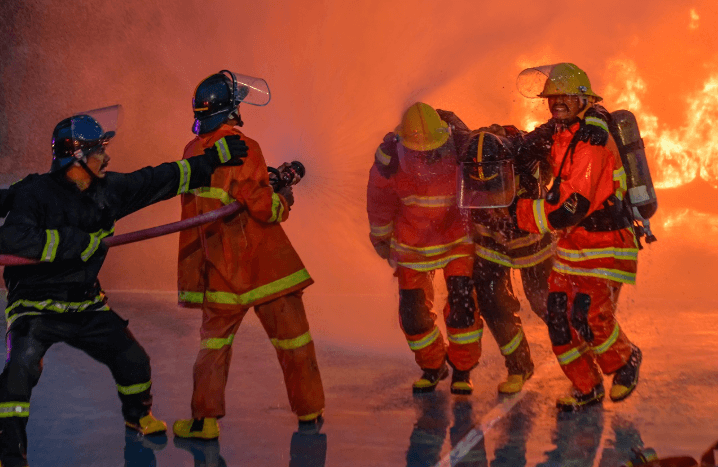

Every shift, firefighters walk into situations that most people will never experience in a lifetime. Structural collapses, mass casualty events, the deaths of colleagues, and the faces of people they could not save. These experiences accumulate quietly over years of service, and the psychological weight they carry rarely gets the same attention as a broken bone or a burn. That gap between physical and mental health care has cost lives, and closing it starts with understanding what firefighters are actually up against.
This article covers the specific mental health conditions common among firefighters, the occupational and cultural factors that make treatment harder to access, and the types of care that research and clinical practice suggest are most effective. Whether you are a firefighter, a family member, or someone who works alongside them, this is practical information worth knowing.
The Psychological Toll of Firefighting Work
Firefighting is classified as a high-stress occupation not just because of physical danger, but because of the chronic, unpredictable, and often emotionally devastating nature of the work. A firefighter does not simply respond to fires. They respond to car accidents, medical emergencies, suicides, drownings, and scenes involving children. Repeated exposure to trauma of this kind creates a cumulative burden that the human nervous system was not designed to absorb indefinitely.
According to the Firefighter Behavioral Health Alliance, more firefighters die by suicide each year than in the line of duty. That statistic has been reported consistently for several years and reflects a mental health crisis that has gone underaddressed for decades. It is not a matter of weakness. It is a predictable consequence of sustained traumatic exposure without adequate psychological support.
Beyond acute trauma, firefighters also contend with shift work disruption, irregular sleep, physical injury, and the administrative pressures of a paramilitary workplace. All of these factors compound each other, making mental health conditions harder to identify and slower to resolve without targeted care.
Common Mental Health Conditions Among Firefighters
The range of psychological conditions seen in firefighters is wide, but several appear with notably higher frequency than in the general population. Post-traumatic stress disorder is the most discussed, but it is far from the only concern.
| Condition | How It Manifests in Firefighters | Prevalence Compared to General Population |
| Post-Traumatic Stress Disorder (PTSD) | Flashbacks, hypervigilance, emotional numbing, avoidance of incident reminders | Estimated 2 to 3 times higher than the general public |
| Depression | Persistent low mood, withdrawal, loss of motivation, sleep disruption | Elevated, particularly after critical incidents or retirement |
| Anxiety Disorders | Generalized anxiety, panic attacks, occupational performance fears | Higher rates reported in active-duty and retired personnel |
| Alcohol Use Disorder | Heavy drinking used to manage stress and sleep problems | Studies suggest rates significantly above national averages |
| Operational Stress Injury | Cumulative stress not meeting full PTSD criteria but functionally impairing | Common and often undiagnosed in career firefighters |
A 2018 study published in the Journal of Occupational and Environmental Medicine found that approximately 46.8 percent of career firefighters surveyed screened positive for at least one mental health condition. That figure is striking, but it also reflects only those willing to participate in the research. The actual numbers may be higher given the cultural pressures around disclosure.
Why Stigma Remains a Barrier
Fire service culture carries an unspoken code. Toughness is valued. Self-reliance is expected. Admitting struggle has historically been read as a sign that someone cannot handle the job. This is not a character flaw in firefighters. It is a cultural norm that developed over generations as a way to function in a high-risk environment, and it is one that has become genuinely harmful when it blocks access to mental health care.
Many firefighters describe a fear that seeking help will result in being sidelined from duties, viewed differently by colleagues, or quietly passed over for promotions. These fears are sometimes grounded in real experiences. Even when departments have formal Employee Assistance Programs, the concern about confidentiality and career consequences keeps many personnel from using them.
There is also a practical barrier. General therapists and counselors, while skilled in many areas, are often unfamiliar with the specific demands and culture of fire service. A firefighter sitting across from a clinician who has never heard of a working structure fire, a mass casualty incident, or the psychological impact of cumulative exposure to death may feel misunderstood within the first few sessions. That disconnect leads to dropout. Firefighter-specific mental health programs exist precisely to address this.
What Effective Treatment for Firefighters Looks Like
Treatment that works for firefighters tends to share a few consistent qualities. It is delivered by clinicians who understand first responder culture or have been specifically trained in it. It incorporates evidence-based trauma therapies adapted for the realities of emergency service work. And it creates a clinical environment where a firefighter does not have to spend half of every session explaining the context of their job before getting to the actual problem.
Evidence-Based Therapies Commonly Used
- Cognitive Processing Therapy (CPT): Helps individuals identify and reframe distorted beliefs that develop after traumatic events. Widely used for PTSD treatment in first responders.
- Eye Movement Desensitization and Reprocessing (EMDR): Reduces the emotional intensity of traumatic memories through bilateral stimulation. Strong evidence base for PTSD across occupational groups.
- Prolonged Exposure (PE) Therapy: Involves gradual, structured confrontation of trauma-related memories and avoided situations to reduce their grip over time.
- Motivational Interviewing: Particularly useful for firefighters dealing with substance use, helping them examine their own reasons for change rather than having change imposed on them.
- Group Therapy with Peers: Peer-based group formats reduce isolation and allow firefighters to process shared experiences with colleagues who understand the occupational context.
The Role of Residential and Intensive Outpatient Programs
For firefighters whose symptoms have become severe, or who are dealing with co-occurring substance use alongside PTSD or depression, outpatient weekly therapy is often not enough. Residential treatment programs and intensive outpatient programs (IOPs) designed specifically for first responders offer a more concentrated level of care. These programs allow firefighters to fully step away from work stress, receive daily or near-daily therapeutic contact, and build coping strategies in a structured environment. Programs tailored to first responders are available in several regions of California, and one resource that specifically addresses this population is https://frca.health/who-we-treat/mental-health-treatment-for-firefighters-in-orange-county/, which outlines mental health treatment options for firefighters in Orange County.
Supporting a Firefighter Who Is Struggling
Family members and close colleagues are often the first to notice when something has changed. A firefighter may not recognize their own symptoms or may minimize them. Knowing how to respond matters.
- Name what you are observing without judgment. Say what you have noticed specifically, like changes in sleep, withdrawal from family, or increased drinking, rather than making broad statements about their mental state.
- Avoid framing it as weakness. Language like ‘you seem like you are carrying a lot’ lands differently than ‘something is wrong with you.’
- Reduce practical barriers. Help them find a clinician with first responder experience, look into whether their department has a peer support team, and offer to assist with scheduling if that is a genuine obstacle.
- Do not push a single conversation to resolve everything. Building trust and keeping the door open is more effective than a single intense talk.
- Take suicidal comments or behavior seriously and immediately. If there is any concern about safety, contact the 988 Suicide and Crisis Lifeline or go to the nearest emergency room.
See also: Residential Mental Health Treatment: What to Expect
Systemic Changes That Are Starting to Help
Awareness of firefighter mental health has grown significantly over the past decade, driven partly by advocacy from surviving families, retired firefighters, and some fire chiefs willing to speak publicly about the crisis. Several meaningful shifts are underway across the United States.
A number of states have passed legislation recognizing PTSD as a line-of-duty condition for first responders, which allows workers’ compensation claims for psychological injuries. California has been among the states with provisions supporting this, though the specifics of coverage and eligibility vary by jurisdiction and employment status. Some departments have embedded mental health professionals within their organizational structure rather than relying solely on external EAP referrals. Peer support programs, where trained firefighters serve as the first point of contact for struggling colleagues, have shown real promise in reducing the gap between recognizing a problem and actually seeking help.
None of these changes fix the underlying culture overnight. But each one reduces the distance between a firefighter who is struggling and the care that can actually help. The goal, as researchers and clinicians in this space tend to agree, is not to make firefighters stop being tough. It is to expand the definition of toughness to include knowing when to ask for help and being willing to receive it.
Mental health treatment for firefighters has come a long way from a topic that was never discussed to one with dedicated programs, trained clinicians, and growing policy support. The work of reducing stigma, improving access, and matching firefighters to care that actually fits their experience is ongoing. But the resources are there, and they are more accessible than they were even five years ago.


 By
By